A practical bathroom renovation checklist for Singapore homes
A clear starting point for planning a bathroom refresh, from the first measurements to the final handover checks.
- Category
- Renovation
- Published
- 10 Nov 2026
- Reading time
- 3 min read
- Written by
- The Frontier Team
A bathroom renovation is much easier to manage when the important decisions are made before work begins. Start with the room you have, the problems you want to solve, and a realistic picture of how the space is used every day. This checklist walks you through the stages in order, so nothing important gets left to the last minute.
Start with the room and your priorities
Measure the room, note where the existing plumbing points are, and take photos from a few angles. Then list what isn’t working now — not enough storage, water pooling in the wrong place, worn finishes, poor lighting or an awkward layout.
Separating essentials from nice-to-haves keeps decisions focused if the scope or budget has to change later.
- Decide whether the layout needs to change, or only the finishes.
- Check ventilation, lighting, storage and everyday access (especially for older family members).
- Keep a small allowance for repairs uncovered during removal.
Tip: Use the bathroom for a week with a notepad nearby. You’ll be surprised how many small frustrations you notice — and those are exactly what a good renovation should fix.
Choose finishes for a wet, frequently used space
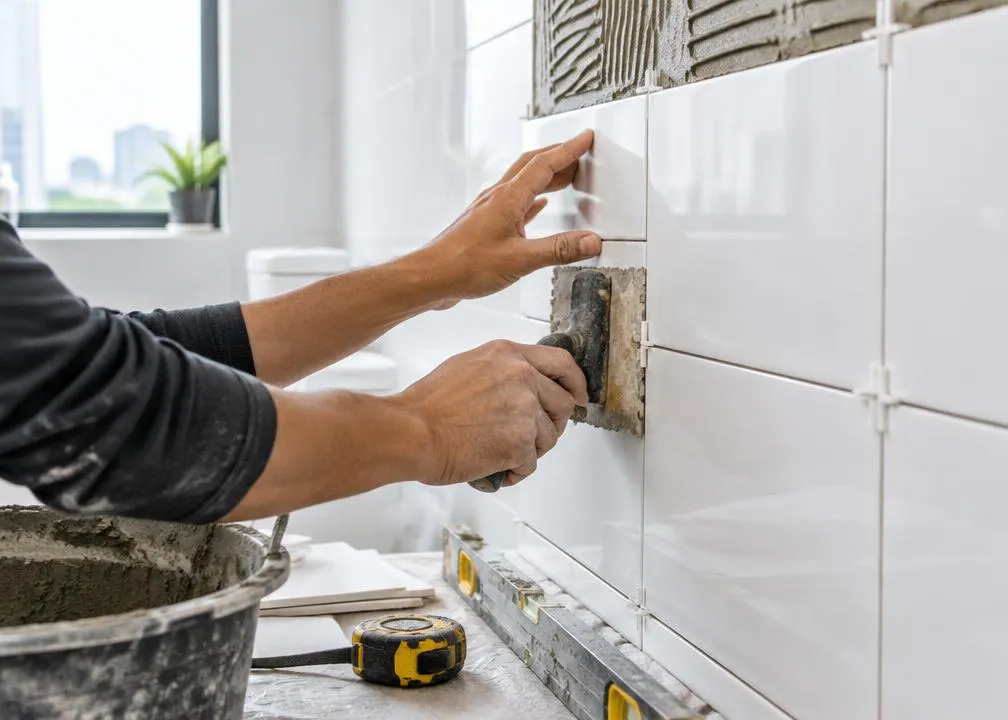
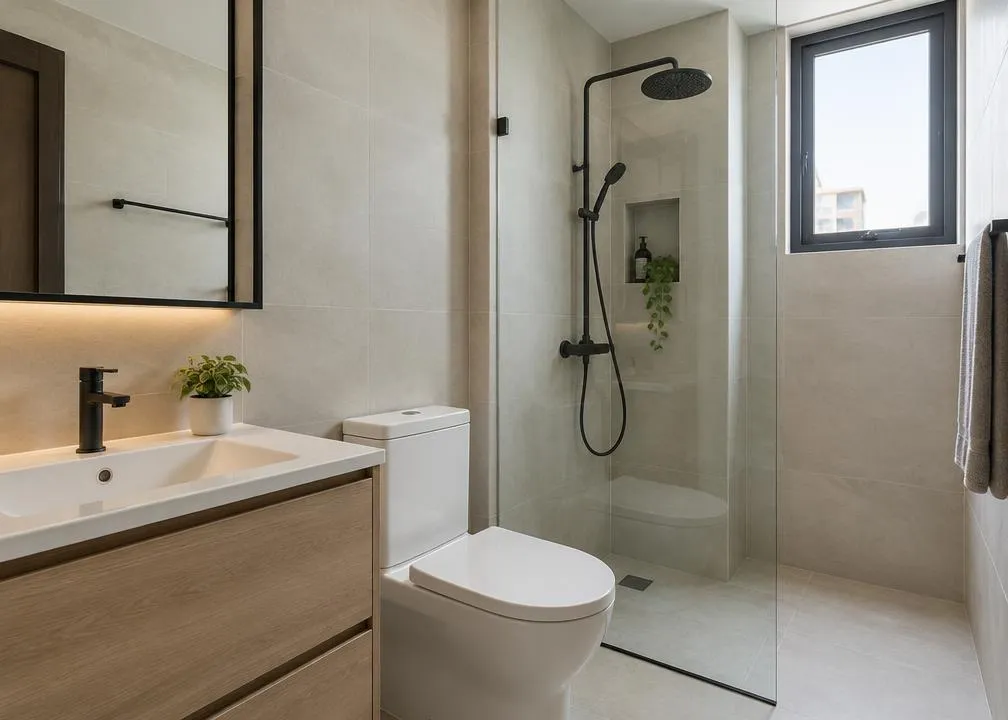
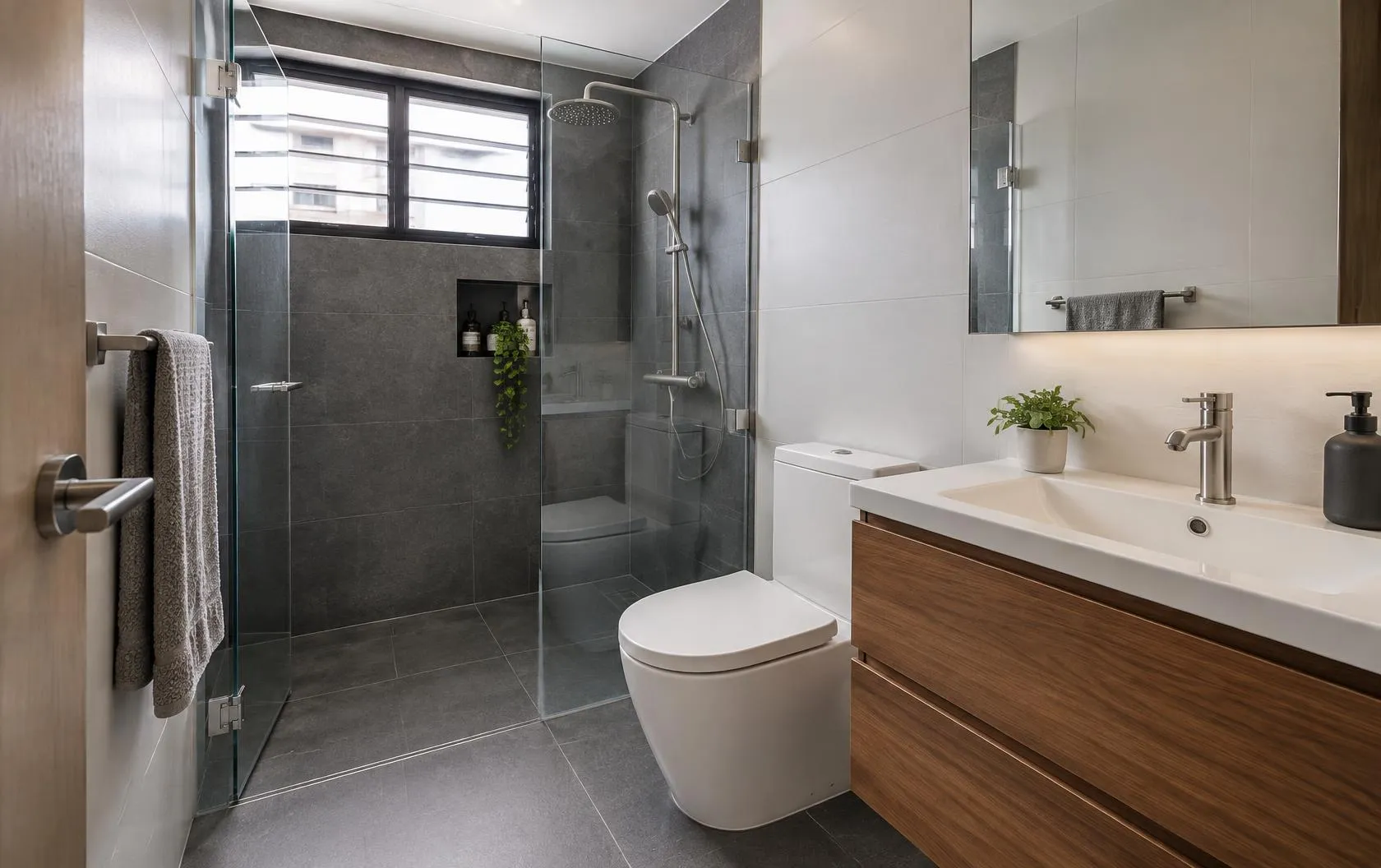
Bathrooms in Singapore deal with constant humidity and heavy daily use. When choosing finishes, think about how easy each surface is to clean, how it feels underfoot when wet, and how joints and edges will be finished — not just how it looks as a sample in a showroom.
| Element | What to consider | Why it matters |
|---|---|---|
| Floor tiles | Slip resistance, texture, size | Safety when wet and fewer grout lines to clean |
| Wall tiles | Cleanability, colour, layout | Water marks and residue show differently on each finish |
| Grout | Colour and type | Lighter grout shows staining; darker hides it |
| Vanity | Material and moisture resistance | Cabinets near water need to cope with humidity |
| Fixtures | Finish, spare parts, warranty | Easy-to-source parts make future repairs simple |
Ask to review tile sizes and placement together. A simple layout plan helps avoid narrow cuts at the edges and makes the finished room feel more considered.
Confirm the scope before work starts
A clear scope protects both you and your contractor. Write down:
- Which areas and surfaces are included.
- Which fixtures and finishes are supplied by the contractor, and which by you.
- What needs to be protected (flooring outside the bathroom, lift lobby, furniture).
- How access, debris removal and progress updates will be handled.
- The expected timeline and any approvals that need to be in place.
Agreeing on these points up front means fewer surprises and smoother conversations once work is underway.
Plan around daily life
If the bathroom being renovated is the only one at home, plan how your household will manage during the works. Ask for a realistic timeline, and find out which days will be the noisiest or dustiest so you can plan around them.
Inspect the details at handover
Before treating the work as complete, take your time with a final walk-through:
- Run every tap and the shower; check water pressure and temperature.
- Watch the floor drain — water should flow away without pooling.
- Look closely at grout lines, silicone joints and tile edges.
- Open and close doors, drawers and cabinets.
- Ask how to care for the finishes you’ve chosen, and keep any warranty documents.
The bottom line
A great bathroom renovation is mostly good preparation. Know what you want to fix, choose finishes that suit a humid, hardworking room, and agree a clear scope before work starts. If you’d like help planning yours, the Frontier team is happy to talk it through.
FAQ — 3 questions
Questions people ask
01 Do I need approval to renovate my bathroom?
It depends on your property type and the work involved. HDB flats and many condominiums have rules for works such as hacking, re-tiling and waterproofing. Check with HDB or your MCST, and ask your contractor what applies to your scope.
02 Should I change the layout or keep the existing plumbing?
Keeping the existing positions of the toilet, shower and basin is usually simpler and more economical. Moving them can make sense if the current layout genuinely doesn't work, but expect more work behind the walls and floor.
03 How much contingency should I set aside?
It's sensible to keep a small allowance for issues uncovered once old finishes are removed, such as damaged screed or old pipes. Discuss with your contractor what is typical for a room of your age and condition.
Share this article