Choosing bathroom tiles for a humid Singapore home
Compare the practical details — slip, cleaning, grout and layout — before you settle on a bathroom finish.
- Category
- Materials
- Published
- 28 Oct 2026
- Reading time
- 2 min read
- Written by
- The Frontier Team
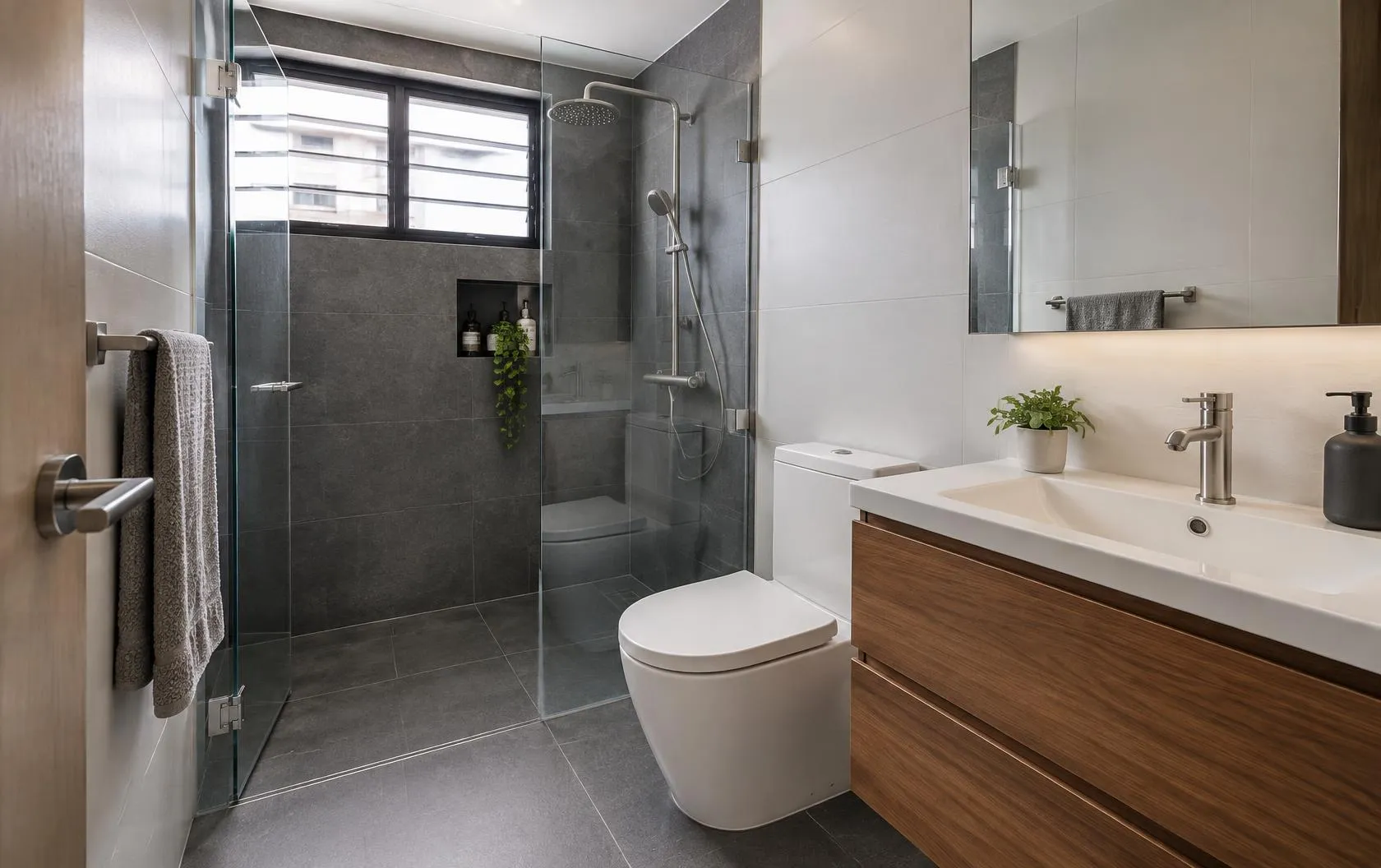
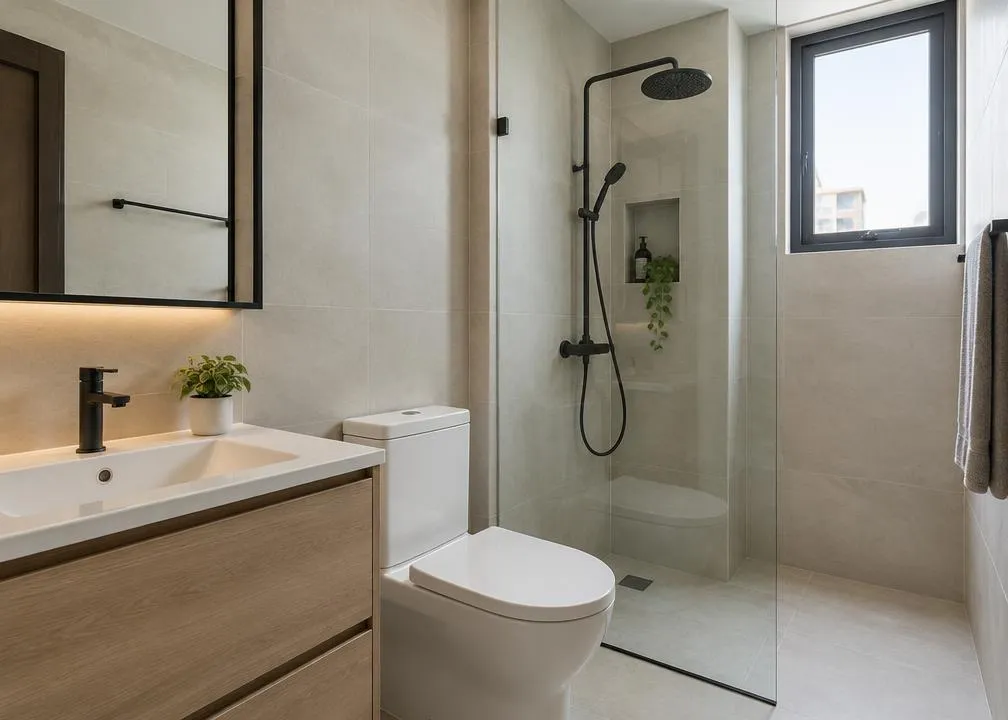
Tile samples can look very different in a bright showroom compared with a real bathroom. In a humid home, it helps to look beyond colour and consider how the surface will feel, how easily it cleans, and how it will hold up to daily water and foot traffic.
Think about where each tile will be used
Floor and wall tiles have different jobs to do.
- Floors need to feel secure when wet, cope with foot traffic, and work with the slope towards the floor drain.
- Walls are mostly about cleaning, visual balance, and how the tiles meet fittings, niches and corners.
Ask the supplier or installer to confirm that the product is suitable for the intended location and installation method.
Compare finishes side by side
| Finish | Look | Grip when wet | Upkeep |
|---|---|---|---|
| Matte | Soft, natural | Good | Hides water marks well |
| Textured | Stone-like, tactile | Very good | Needs a slightly firmer scrub |
| Satin | Subtle sheen | Moderate | Easy to wipe |
| Glossy | Bright, reflective | Lower — best on walls | Shows water spots, easy to clean |
Balance appearance with upkeep
Glossy, textured, dark and patterned surfaces each show water marks and everyday residue differently. Bring samples home if possible, and look at them under the room’s actual lighting at different times of day.
- Check the cleaning guidance and recommended grout care.
- View several tiles together to understand repeating patterns.
- Treat grout colour as part of the overall finish.
Good to know: Very light grout shows staining sooner in a busy shower area. A mid-tone grout that’s close to the tile colour is often the most forgiving choice.
Plan the layout and edges
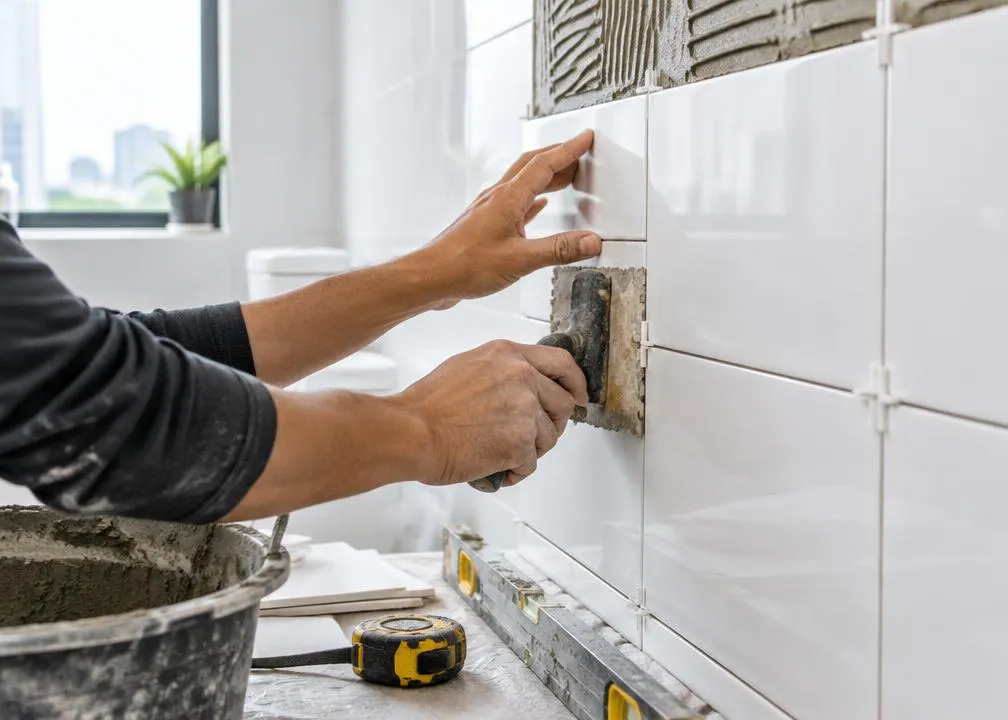
Tile size affects the number of joints and the cuts needed around drains, niches and fixtures. A short layout discussion before installation helps everyone understand where the main lines and edges will fall — and avoids thin slivers of tile in visible corners.
Things worth agreeing on:
- Where the first full tile starts on the main wall.
- How tiles line up between wall and floor.
- How external corners and edges will be finished.
- How the floor tiles will work with the slope to the drain.
Order enough for the full job
Confirm quantities with the installer before ordering, including an allowance for cuts and breakage. Keep a few spare tiles after completion where possible — if a tile ever cracks, you’ll have an exact match ready.
The bottom line
The right bathroom tile is the one that suits your room: safe underfoot, easy to keep clean, and laid out with care. Take samples home, think about grout early, and plan the layout before the first tile goes down.
FAQ — 3 questions
Questions people ask
01 Are large tiles better for small bathrooms?
Larger tiles mean fewer grout lines, which can make a small room feel calmer and easier to clean. On floors, though, the tiles need to follow the slope to the drain, so the installer may recommend a size that works with the falls.
02 Glossy or matte tiles for a bathroom floor?
Matte or textured finishes generally offer better grip when wet, which is why they're common on bathroom floors. Glossy tiles are often used on walls where slip resistance isn't a concern.
03 How many spare tiles should I keep?
A few spare tiles from the same batch are useful if a tile ever cracks. Colours can vary between production batches, so matching later can be difficult.
Share this article